
ON-FARM STORAGE – QUO VADIS?

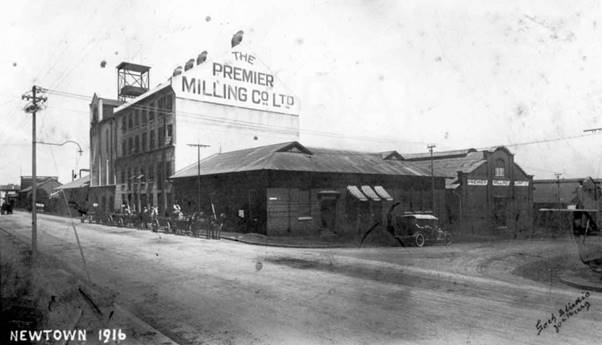
Grain storage has been a politically sensitive issue since the beginning of the 20th century. In the early 1900s there was hardly any grain storage available in South Africa and the few facilities that existed belonged to milling companies such as Premier Milling in Newtown, Johannesburg which erected some of the first, limited facilities to store flour, imported wheat and grain purchased from local farmers. It was only in the years that followed the promulgation of the South African Marketing Act in 1937, that storage was collectively built by farmer co-operatives who, as agents, stored grain on behalf of the agricultural Control Boards that was established under the same Act.
Significant progress was made in terms of grain storage techniques from the 1950s to the 1990s, with South Africa at times taking a global lead in some of the techniques used and achievements enjoyed. However, with the demise of the Marketing Boards in the 1990s, grain storage was overnight transferred back to the hands of the private sector – no more government grain storage contracts via control or marketing boards. Every pit stored had to be paid by either the farmer, trader or miller/processor. Grain storage became a competitive business with the ex-co-operatives, now agri-businesses, competing to offer the best grain handling and storage services to prospective clients. Farmers, who were previously members of the respective co-operatives, became shareholders and had to pay not only for storage but also for all related services such as grading, weighting, screenings, drying, etc. Farmers therefore became clients and agri-businesses had to compete for their business.
In the initial years after deregulation, agri-businesses dominated the grain storage industry. Very few farmers or processors had any significant storage capacity. Prior to deregulation, there was no need to maintain their own storage facilities as most farmers were fairly close (less than 20km) to professionally managed co-operative storage facilities, while processors could order grain as necessary or on a weekly basis. The on-site facilities at processors catered for off-loading, blending and probably a week’s worth of supplies. Traders did not exist. Any profits from grain storage were for the benefit of co-operative members.
In 2016 DAFF reported that when the maize industry was deregulated, 90% of the co-operatives converted to private companies. These private companies own 85% of the total maize storage capacity, which is currently 16.3 million tons. There are 432 silos, of which 172 are on-farm and 260 are commercial. The commercial silos, owned by 17 silo owners, account for 94% of the available silo capacity country-wide. In South Africa there are three major commercial silo owners, namely Afgri, NWK and Senwes, who own 73% of the available storage capacity within the national grain storage market. Other important players are VKB and Suidwes.
Capacity is by no means the only factor that determines the ability or effectiveness of the grain storage industry. Probably the second most important factor is location of an individual facility, or the even distribution of a number of storage facilities across the countryside to suit the needs of its customers. Some facilities’ turn-over in volume per year is two to three times their capacity, while others are not even filled throughout the year, i.e. less than once. Other important services include screening capabilities, the number of smaller silo bins for different grades, blending, aeration, fumigation, drying, in- and outload capabilities, etc. which all are important services in a modern competitive storage environment.
As more farmers divested themselves of the shares they obtained from the co-operative transition to companies, client relationships with the former co-operative were more than ever based on business and no longer on membership profit sharing. General goodwill, however, still plays an important factor in many cases. Furthermore, in a free market environment and a national economy that is growing at only around 1% per annum, competition in the grain value chain is ever increasing. Farming activities increased in size, direct sales to processors is possible, and transport from the farm (on-farm loading) to processors has become a common practise. Therefore the demand for on-farm storage and increased storage at processing facilities (mills) is on the rise.
Leave a Comment
Your email address will not be published. Required fields are marked *